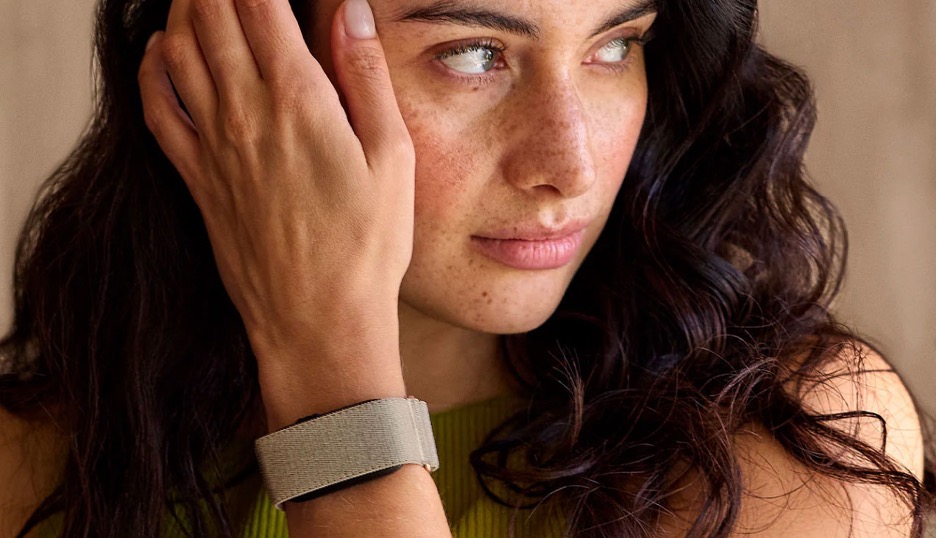
Garmin has built its reputation around feature-packed fitness watches, but the new Garmin Cirqa takes a very different approach. There is no colorful AMOLED display, no stream of notifications and no temptation to constantly check your wrist. Instead, Cirqa is a screenless fitness tracker designed to quietly collect health and activity data throughout the day and let you review everything later in the Garmin Connect app.
At $199.99 in the US, Cirqa sits in an interesting space between inexpensive screenless trackers and subscription-based devices such as Whoop. Its biggest selling point is simple: you buy the device, and the core health and fitness features don't require a monthly subscription.
Minimalist Design, Surprisingly Practical
Cirqa looks more like a discreet fitness band than a traditional smartwatch. A lightweight sensor module sits inside a soft fabric strap, and the entire device weighs around 21 grams. Garmin offers two sizes and several colors, while the fabric construction makes it comfortable enough for sleeping, exercising and wearing all day. It is also rated for 5 ATM water resistance.
The most interesting design element is a physical button. With one press, you can start a workout, while vibration confirms that recording has begun. That sounds like a small detail, but reviewers found it useful because you don't have to open your phone or wonder whether an activity has actually started.
The downside is that Cirqa is somewhat chunky compared with some competing screenless bands. People with particularly small wrists may want to try it before buying.
Health Tracking Is the Real Star
Although the hardware is deliberately simple, Cirqa collects an impressive amount of information. It monitors heart rate, HRV, stress, Pulse Ox, skin temperature, sleep, Body Battery and Training Readiness. It can also automatically detect certain activities and supports more than 80 activities through the device or Garmin Connect.
Sleep tracking is another strong point. Garmin provides sleep scores, sleep stages, HRV trends and personalized sleep guidance. Women's health features, including menstrual-cycle and pregnancy tracking, are also available, with skin-temperature data supporting additional cycle insights.
Independent testing has generally found Cirqa's heart-rate tracking impressively accurate. TechRadar, for example, compared it against a Polar H10 chest strap and found most workouts within a few beats per minute, although one strength-training session produced a larger discrepancy.
Battery Life and the Screenless Trade-Off
Garmin claims up to 10 days of battery life, which is one of Cirqa's biggest advantages. Real-world testing varies depending on usage, but reviewers have generally achieved roughly a week or more between charges.
Related Apple Could Soon Develop Screen-Free Fitness Tracker
But removing the screen creates an obvious limitation: you cannot see your pace, heart rate or workout statistics while exercising. Cirqa also has no built-in GPS, so outdoor distance and pace tracking depend on a connected smartphone.
That makes Cirqa better suited to people who want background health and fitness tracking than serious runners who need real-time training information.
Verdict
The Garmin Cirqa is an unusual wearable, but its simplicity is also its appeal. It delivers a surprisingly comprehensive collection of health, sleep and fitness metrics while staying out of your way.
The strongest reason to choose it is the combination of Garmin's mature health-tracking ecosystem, comfortable screen-free design, long battery life and no mandatory subscription. The biggest compromises are the lack of a display, onboard GPS and the relatively high price for a screenless tracker.
For existing Garmin users, Cirqa can also make a compelling secondary device—particularly for people who don't want to wear a full-sized Garmin watch to bed or during everyday activities. For dedicated athletes, however, a conventional Garmin watch remains much more practical.
Ultimately, Cirqa isn't trying to replace your smartwatch. Its philosophy is almost the opposite: track more, display less, and let you get on with your day.