A new study reveals that smart electronic rings linked wirelessly to an AI-powered platform can convert several different sign languages into written text.
“I believe this is an important step toward making sign language translation systems more practical, lightweight, and usable in real-world environments,” says Ki Jun Yu, an associate professor of electrical and electronic engineering at Yonsei University in Seoul, Korea.
Today, around 70 million deaf individuals around the world rely on one of nearly 300 different sign languages. However, only a small portion of the hearing population can understand these forms of communication. As a result, common social interactions — from placing a food order to introducing oneself at gatherings — can become frustrating barriers for deaf communities. Hoping to make communication easier, researchers in South Korea have created intelligent wearable rings capable of converting hand and finger movements into written text.
Earlier technologies mainly depended on wearable sensors designed to monitor either physical hand movements or the electrical activity generated by muscles. One widely used approach involved smart gloves, but these devices often became uncomfortable during extended wear because they trapped sweat and heat inside the material. Their rigid sensor layouts also struggled to adapt to differences in users’ hand shapes, finger proportions, and joint placement, which frequently affected precision and reliability, reports IEEE Spectrum.
Another drawback was limited mobility. Many of these systems needed wired connections to computers, restricting natural hand motion. Even in cases where the collected information was later sent wirelessly to an outside processor, the sensors themselves were usually still tethered to a central transmitting unit through cables, reducing overall convenience and flexibility.
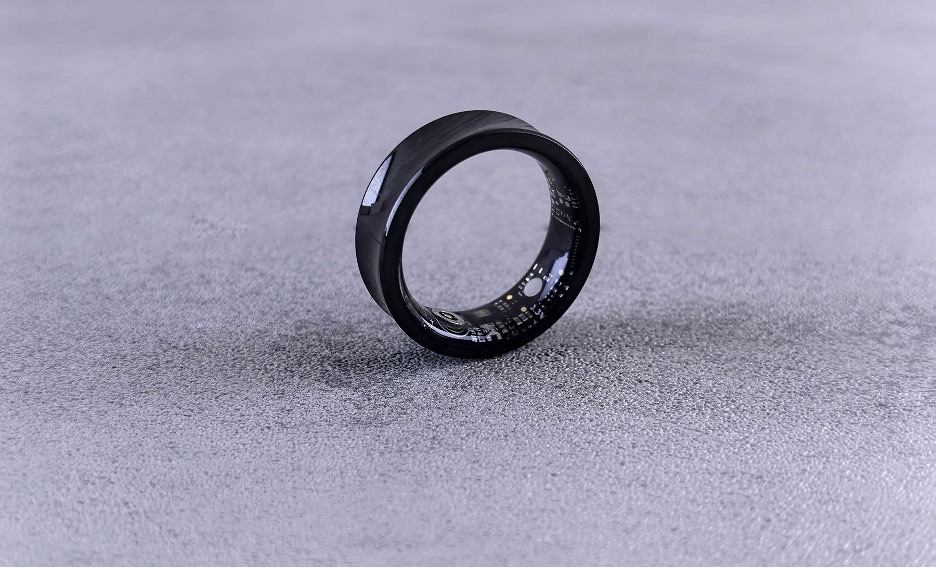
Researchers have now introduced a new wearable system made up of compact electronic rings that send movement data wirelessly to a central processor. Unlike bulky smart gloves, the ring-based design allows sensors to be placed more naturally on different fingers, making the technology better suited to the unique shape and movement patterns of each user’s hands. Because the system operates wirelessly, users can move their hands freely without being restricted by cables.
According to Yu, advances in Bluetooth Low Energy system-on-chip technology have made it possible to combine wireless communication, power control, and sensing hardware into a flexible device small enough to fit comfortably on a finger.
Related New Smart Ring Wakes Users Up Mid-Apnea Before They Know It
During the study, the team analyzed which fingers contributed most significantly to sign language gestures and found that seven fingers carried the majority of the movement information. To simplify the design and minimize unnecessary hardware, the final setup used only seven rings.
The rings were equipped with accelerometers that functioned as motion sensors, enabling them to recognize both still hand positions and moving gestures. This was important because sign languages rely on a combination of fixed poses and fluid transitions. The researchers also intentionally avoided using bioelectrical signals, since those measurements vary widely between individuals and typically require time-consuming calibration for every user.
Building a durable device presented another obstacle. Early prototypes used straight copper connections, but repeated bending caused them to weaken and nearly fail. To solve this problem, the engineers redesigned the connectors using flexible serpentine-shaped patterns that could tolerate constant movement without breaking.
The team also created an advanced deep-learning model capable of interpreting sign language through tracked hand movements. Remarkably, the system was not limited to the individuals whose gestures were used during training. It also performed successfully with five completely new participants who had never contributed data to the learning process, indicating that the technology may work broadly across users without requiring extensive personalization or recalibration.
When tested on those new participants, the platform correctly identified 100 frequently used words from American Sign Language and another 100 common signs from International Sign Language with accuracy rates of 88.3% and 88.5%, respectively. Earlier sign-language translation technologies generally supported vocabularies of fewer than 50 words, making the new system a significant step forward in both scale and practical usability.
“Two hundred words is a meaningful advance over prior wireless systems, but it is still a small fraction of a full sign language lexicon, which can contain thousands of signs,” cautions Dosik Hwang, a professor of electrical and electronic engineering at Yonsei University. “I want to be careful not to overstate what the current system can do in open-vocabulary, real-world conversation.”
The new system was not just capable of recognizing isolated words, but of translating entire sentences from continuous signing. The scientists suggest this could help support real-time interpretation.
In the long term, “our goal is to make the system work with everyday devices such as smartphones without requiring specialized external equipment,” Yu says. “The rings could wirelessly transmit sign language signals to a mobile device, where they would be automatically translated and displayed in real time. This would make the technology more portable, accessible, and practical for daily communication.”