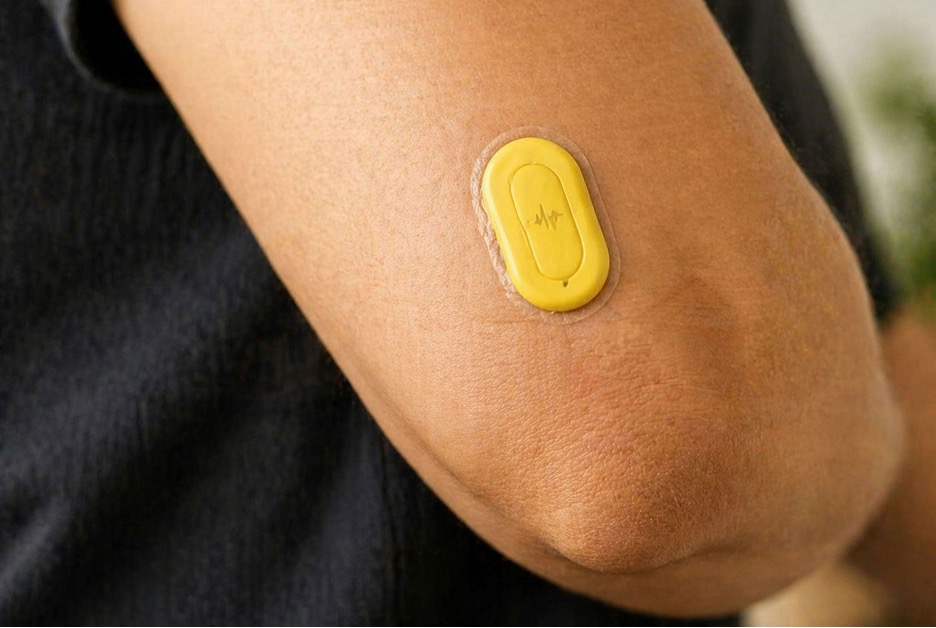
The market for wearable health patches is growing rapidly. It is expected to expand by about 10% to 11% each year, increasing from an estimated $13–15 billion in 2026 to more than $20 billion by 2030.
A major reason for this growth is the expansion of home-based healthcare. The Acute Hospital Care at Home waiver, which allows hospitals to provide hospital-level care in patients' homes and receive reimbursement for it, has been extended by Congress until September 30, 2030. According to Lisa Voronkova in MDDI Online, this gives healthcare systems enough time to build long-term home care programs that rely on wearable health sensors instead of treating home care as a temporary solution introduced during the pandemic.
Another important factor is the aging population and the growing shortage of caregivers. As more older adults need medical care and fewer caregivers are available, healthcare is increasingly moving out of hospitals and onto wearable devices that monitor patients from home.
However, this shift also creates a challenge. Many wearable patches are now being used by older adults, whose skin is often thinner and more fragile. Yet most patches are not specifically designed for this group. Despite this important issue, product launch announcements rarely mention the need for patches that are better suited to aging skin.
Patients Who Generate the Pivotal Data Tend To Be Much Younger
Like many clinical trials of continuous glucose monitors (CGMs), the CONNECT study mainly included middle-aged adults. On average, participants began the study with an HbA1c level of 8.8%, indicating that their blood sugar was not well controlled. The study sponsor also reported that the benefits of the CGM were consistent regardless of participants' age, sex, or ethnicity.
Related Jewel - Smart Cardiac Monitoring Patch
However, there is an important limitation. Diabetes is most common among older adults, yet the people enrolled in clinical trials are often about ten years younger and generally healthier than the patients who will eventually use these devices in everyday life. In other words, the device is tested on a healthier group than its real-world users.
This does not mean that CGMs are ineffective. Instead, it highlights the need to understand how these devices perform in the older, less healthy populations who are most likely to depend on them.
Medical Adhesives Are Not Designed For Older Patients
Medical adhesives are not designed for the older patients. According to research on skin mechanics, as people age, their dermis and epidermis thin and their mechanical stability can be reduced by up to four times.
To put it simply, an older patient's skin can be lifted together with its outer protective layer by the same mild tug that removes a 50-year-old's skin with ease.
Long-term care surveys show medical adhesive-related skin injury at around 15% of residents, with hospital studies approaching 7% of inpatients, and greater rates expected in frail older persons.
Only 31% of Adults Aged 75 to 79 Owns A Smartphone
Only roughly 31% people between the ages of 75 and 79 owned a smartphone, according to Pew's most recent comprehensive age breakdown. Although this percentage has since increased, many elderly patients still lack the screen that many systems use as their primary display.
Additionally, the backup hardware is not yet reliable. A flaw in certain Dexcom's handheld receivers prevented them from sounding an audible alarm, which meant that a patient who relied solely on hearing could completely miss the warning. As a result, Dexcom had to update its handheld receivers.
Moving Up The Stack Reveals The Same Recurring Blind Spot
The software layer is also becoming more stringent on its own routine. The EU AI Act's high-risk regulations will start to apply on August 2, 2026, to AI integrated into devices that already require the EU's pre-market conformity review as AI-driven coaching and predictive alerts advance inside these systems. This means that a connected, AI-enabled patch may be subject to both medical-device and AI regulation concurrently.
The next generation of the patch will be determined by the companies who bridge that gap rather than expanding beyond it.