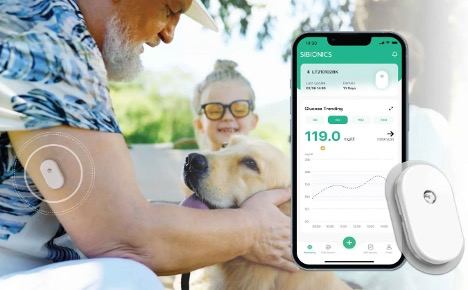
SiBionics, a Shenzhen-based Medtech company presented "See More, Act Earlier," connecting continuous sensing with future diabetes care, at the European Association for the Study of Diabetes (EASD) 2026. Three exhibition chapters shaped this vision: "See More: Beyond Glucose," covering glucose, ketone and combined monitoring; "Act Earlier: From Insight to Intervention," exploring multimodal sensing and insulin delivery; and "Go Further: Realizing the Unimagined," looking toward broader biosensing applications.
The vision was further explored at the SiBionics industry symposium, "From Sensors to Integrated Care: Emerging Technologies Shaping the Future of Diabetes Management." The symposium was chaired by Prof. Mark Evans, of the University of Cambridge and Cambridge University Hospitals, United Kingdom, and Dr. Guido Freckmann, of the Institute for Diabetes-Technology GmbH (IfDT), Germany, says a press release.
Prof. Karolina Kędzierska-Kapuza discussed CGM and individualized care in type 3c diabetes. Prof. Wei Qiang presented CGM accuracy findings and future multimodal sensing concepts. Prof. Andrej Janež explored continuous ketone monitoring in the GLP-1 era. Prof. Ahmad Haidar presented ketone monitoring research and the first findings of the SMART02 feasibility study on integrated glucose sensing and insulin delivery.
SMART02 evaluated an early prototype of niia signature, an investigational device jointly developed by PharmaSens and SiBionics since the two companies announced their collaboration in June 2025. niia signature will combine continuous glucose monitoring (CGM), insulin delivery and an automated glucose control (AGC) algorithm in one wearable patch. It aims to reduce the burden of managing separate devices for automated insulin delivery (AID).
Related Google to Add Insulin Resistance Tracking
The study addressed a central integration challenge: maintaining glucose measurement performance when insulin is delivered close to the sensor. Temporary interference after a bolus was uncommon overall and occurred mainly with doses of 10 units or more, where the probability was 20 to 25%. On average, the sensor signal fully recovered approximately 20 minutes after bolus delivery. In the second part of the study, the prototype was also tested together with the AGC algorithm developed by Prof. Ahmad Haidar. The PharmaSens niia patch pump, the SiBionics sensor and the AGC algorithm performed consistently throughout the study. The findings, also featured at the SiBionics booth, mark an early development milestone.
Together, the exhibition and symposium connected clinical needs with emerging technologies. Through niia signature, PharmaSens and SiBionics are exploring how integration could make future AID easier to wear and use. Further research is needed to establish its performance and clinical potential.
niia signature is an investigational device. It is not approved or cleared in any market and is not available for sale.
About SIBIONICS
Founded in 2015 and headquartered in Shenzhen, SiBionics is a medical technology company specializing in CGM and multi-parameter health solutions, with nearly 700 professionals worldwide. Combining advanced sensor technology with AI-driven algorithms, the company develops accessible, reliable solutions for chronic disease management.
About PharmaSens
PharmaSens AG, a privately owned Swiss company, is dedicated to simplifying diabetes management and broadening the reach of insulin pump therapy. The PharmaSens team has a wealth of experience in diabetes care and medtech device engineering, having contributed to the development of multiple insulin pump generations.