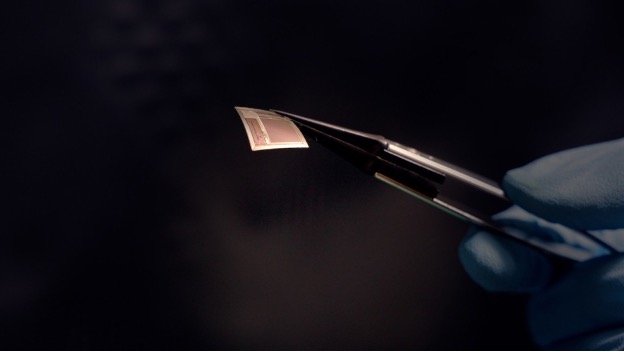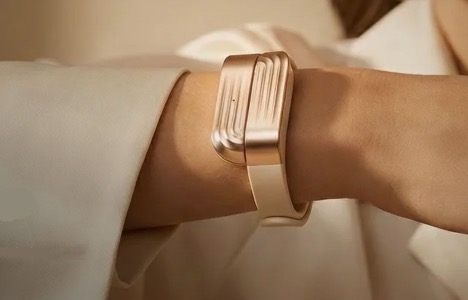
Clair Health's wearable wristband uses a stack of ten biosensors, including biomagnetic sensors that it claims are not found in any competing consumer wearable, to read physiological signals like skin temperature, heart rate variability, and electrodermal activity. These markers are then run through AI models to determine a woman's hormonal cycle rather than taking blood or puncturing skin.
The concept of hormones is not abstract. They are physical molecules that attach to receptors throughout your body to cause quantifiable physiological effects that occur constantly, throughout several organ systems, and 24/7. This fundamental biology is the basis of Clair's methodology.
Following ovulation, progesterone increases and binds to hypothalamic receptors, raising your thermoregulatory set point by 0.3–0.5°C. It simultaneously lowers parasympathetic-mediated heart rate variability (RMSSD) by around 12%, raises resting heart rate by about 3.5 BPM, and modifies body composition through fluid retention that may be measured by bioimpedance. As estrogen levels rise during the follicular phase, it encourages vasodilation, which changes the spectral properties of photoplethysmographic signals, pulse wave shape, and arterial stiffness.
Clair’s multi-modal sensor array captures over 130 mechanistic indicators from the circulatory, thermoregulatory, autonomic, electrodermal, body composition, respiratory, acoustic, sleep, and activity domains. Their algorithms, which are trained against clinical-grade hormone ground truth rather than merely self-reported cycle data, learn the mapping between these multi-system physiological markers and the underlying hormonal state. As a result, the body continuously deduces hormones from signals it already produces.
Progesterone and estradiol are not measured by urine-based fertility and ovulation tests. They assess the hepatic metabolites of those hormones, E3G (estrone-3-glucuronide) and PdG (pregnanediol glucuronide). The test strips use the metabolite level to determine the levels of the parent hormone. Hormone molecules cannot be directly detected by blood immunoassays, the clinical gold standard for the majority of hormone testing.
Clair's approach is a different modality of inference – physiological rather than biochemical – but the epistemic structure is the same: measuring one thing to determine another, validated against ground truth. Their validation shows 94.1% accuracy in cycle phase classification and 87% sensitivity for LH surge detection, benchmarked against clinical-grade hormone assays (urinary LH for surge detection, serum and urinary hormone panels for phase classification). As Clair advance through their clinical study program in the coming months, the company said it will publish these validation metrics “so the scientific community can evaluate our inference chain on its merits.”
Clinically Validated Cycle Tracking
Tested across 40+ women and 127 menstrual cycles, Clair’s prototype analyzed more than 5,000 days of physiological data. Unlike studies relying on self-reported periods, our predictions were validated against clinical-grade hormone measurements.
The results showed 94.1% accuracy in identifying menstrual cycle phases using wearable data alone, along with 87% sensitivity in detecting LH surges. The study included women with regular and irregular cycles, diverse ages, BMIs, and skin tones.
Accuracy was higher for regular cycles (95.2%) than irregular ones (84.3%), highlighting an important area for further research and improvement.
Is Clair FDA approved?
Clair 1.0 will launch as a general wellness device, which does not require FDA clearance under current regulations. It provides cycle phase tracking, hormonal trend insights, and wellness metrics.
Clair 2.0 will pursue FDA 510(k) clearance to enable medical-grade claims -- including quantitative hormone reporting and ovulation detection for fertility applications. The regulatory pathway is well-established within the existing classification framework for reproductive health monitoring devices.
Can Clair track workouts, cardiovascular health, sleep, and other wellness metrics?
Yes. Clair's sensor array is more comprehensive than most consumer fitness wearables, not less. We continuously capture heart rate, heart rate variability, skin temperature, multi-axis motion, sleep staging, respiratory patterns, electrodermal activity, bioimpedance, and more.
You will get workout detection, cardiovascular health metrics, sleep analysis, and stress monitoring. But with Clair, these metrics are contextualized by your hormonal state.