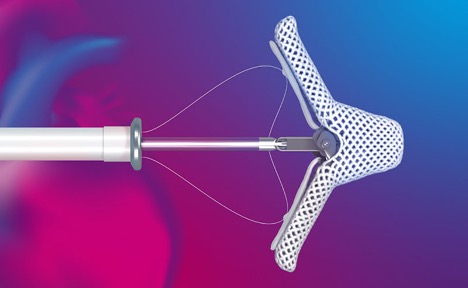
In an attempt to catch up in valve replacements after Boston Scientific's recent global withdrawal, Abbott is stepping up its efforts in the structural heart space.
Sales of its Navitor transcatheter aortic valve replacement implant have doubled in the last two years, mostly due to growth in Europe and globally, according to CEO Robert Ford, and the future appears bright, reports Conor Hale in Fierce Biotech.
Although Edwards Lifesciences and Medtronic are still the biggest companies in the industry, Boston Scientific declared in late May that it will stop pursuing FDA approval and remove its Acurate family of TAVR valves from the market, including those that were just authorized in Europe.
The company said the move followed conversations with overseas regulators and setbacks in a U.S. clinical study. According to Boston Scientific, accurate valves have been used to treat over 80,000 patients and are available in more than 50 countries.
Related Abbott Receives FDA Clearance for Two CGMs
“There's an opportunity here to accelerate growth internationally, with a competitor market exit,” Ford said on Abbott’s second-quarter earnings call with investors. “I know the team’s all over that, and with the upcoming CE mark that we have planned for Navitor to have a low and intermediate risk label expansion—it could come at a perfect time, to be quite honest with you.”
By the end of this year, Abbott plans to double the size of its associated sales force in comparison to 2024 in an effort to expand its presence in the United States.
“Right now we're in about 20% of the centers in the U.S., and the way to expand our position here is we’ve got to be in more centers. And the way to do that is you need more clinical people, you need more feet on the street,” Ford said. “We’re putting ourselves in the realm of being more competitive, in terms of access to sites.”
Abbott is also developing a new balloon-expandable TAVR implant, with first-in-human procedures completed late last year, that will sit alongside Navitor’s self-expandable approach.
“Once you commit yourself to developing next-generation, balloon-expandable TAVR, that also opens up a nice opportunity for us—even though that'll probably be more towards the end of this decade, in terms of a full launch,” he said.
As an addition to its MitraClip repair system, Abbott received FDA approval last quarter for its Tendyne mitral valve replacement implant, which is not related to TAVR. Additionally, by 2028, the company intends to build a new cardiovascular device manufacturing facility in Georgia.