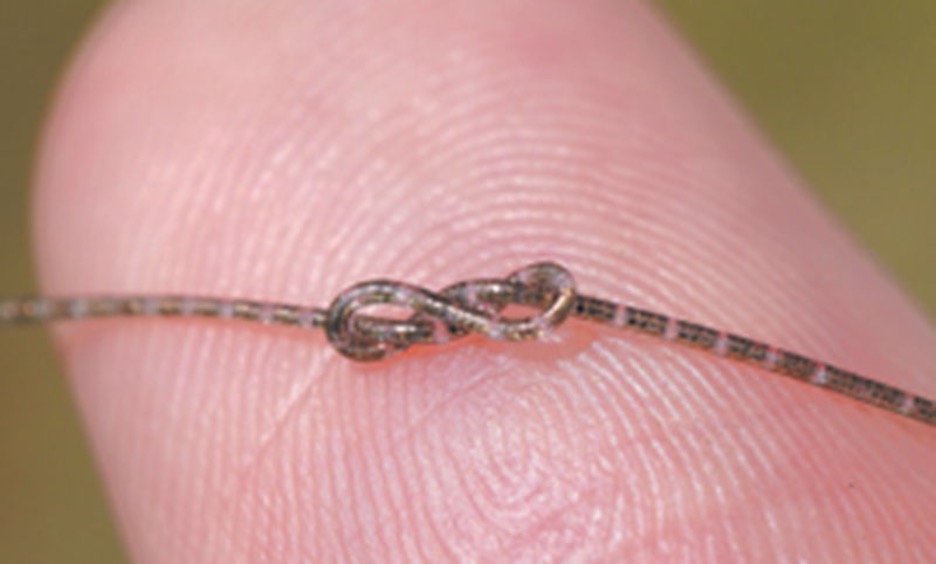
Complex electronic circuits have been successfully constructed inside thin, flexible fibers by a research team at Shanghai's Fudan University. This innovation, known as a fiber chip, enables textiles to process data similarly to a computer while yet being pliable enough to be twisted, stretched, and woven into regular garments.
The advancement has the potential to revolutionize sectors such as virtual reality, high-tech textiles, and brain-computer interfaces (BCI), which enable direct communication between the brain and external systems.
Computer chips are usually made of stiff materials like silicon and are flat and rigid. Additionally, it has proven challenging to attach enough electronic components to fibers to make them functional because to their curvature and small surface area. The Fudan University team decided to do more than merely use the fiber's surface to overcome this problem. In order to utilize all of the interior space, they instead created a multilayered spiral architecture, which effectively consists of multiple layers of circuitry inside the fiber, reports China Daily.
According to the team's experiments, 10,000 transistors – the tiny switches that process data in electronics – can fit on a fiber chip that is just 1 millimeter long. As a result, it has the same processing capacity as a heart pacemaker chip. The fiber could accommodate millions of transistors and achieve the power levels of a typical desktop computer processor if it were stretched to a length of one meter.
The study, which questions the conventional method of producing computer chips, was released in the journal Nature.
Scientists have been giving fibers fundamental abilities like energy storage and touch perception for decades. However, in order for these smart textiles to work, they typically needed to be connected to large, rigid computer chips. The clothes became unpleasant and stiff as a result. The fabric can now think and act on its own thanks to the new fiber chip, which removes that necessity.
“Our fabrication method is highly compatible with the current tools used in the chip industry,” said Chen Peining, a researcher at Fudan University's Institute of Fiber Materials and Devices. “We have already achieved a way to mass-produce these fiber chips.”
The healthcare industry will be significantly impacted by the technology. Current BCI systems require external computers to be linked to stiff electrodes. A closed-loop system, in which medical stimulation, data processing, and sensing all take place inside a single, soft fiber, might be made possible by the fiber chip.
According to the study's co-author, Professor Peng Huisheng, these fibers are as flexible as brain tissue and as thin as 50 micrometers, which is thinner than a human hair. As a result, they are safer and more efficient in treating neurological conditions.
The technology may result in more intelligent tactile gloves in the virtual reality space. The clumsy hardware used in many VR gloves nowadays makes them feel strange.
According to Chen, fiber-chip-based smart tactile gloves are identical to regular cloth. During a remote robotic surgery, surgeons may use their ability to sense and mimic the feel of various items to "feel" the hardness of tissue.