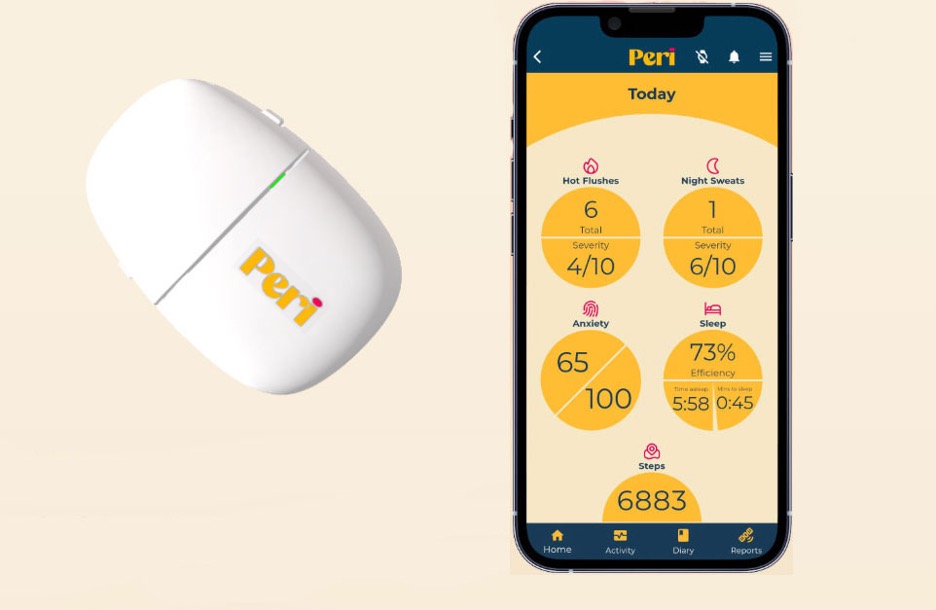
Peri, a new wearable device designed to track perimenopause symptoms, was unveiled at CES 2025. The device, developed by identifyHer, focuses on providing women with objective data and personalized insights into their perimenopausal experience. Peri is designed to be worn on the torso, allowing it to capture "digital fingerprints" that are more indicative of perimenopause symptoms than traditional wrist-worn wearables.
The term "perimenopause" describes the time leading up to menopause when the ovaries gradually quit functioning. When hormones like progesterone and estrogen start to decline, mood swings, irregular periods, hot flashes, and night sweats may result. Though it might be as short as a few months or as long as ten years, perimenopause symptoms can vary greatly from person to person and typically last four to eight years, reports The Verge.
Peri is a discreet and unobtrusive wearable device that passively tracks perimenopausal symptoms from the surface of the skin. Along with the companion app, Peri captures objective symptom and lifestyle data to provide personalized insights that empower you to unlock your greatest potential in perimenopause and beyond.
Related Movano’s Evie Ring for Women
According to the company’s press release, the device will provide “objective data on perimenopausal symptoms, lifestyle, and sleep, as well as actionable insights and encouragement to better understand the changes their bodies are undergoing.” In official pictures, the device itself appears to be pill-shaped and adheres to a person’s torso as opposed to their wrist or finger, like most other health trackers.
“We will keep the specific sensors confidential until we open pre-orders,” says Peri cofounder Heidi Davis, though Davis acknowledges that none of the sensors in the device are new or proprietary. “Our breakthrough lies in the digital fingerprints we have identified through three years of R&D, collecting sensor data from women experiencing perimenopause.”
Davis says, the "fingerprints" were subsequently utilized to create algorithms that offer ongoing information on perimenopausal women's anxiety, hot flashes, and nocturnal sweats. According to Davis, one unexpected discovery is that body temperature isn't a good predictor of hot flashes. Additionally, extra care was taken to make sure that factors like exercise or warm weather, which might alter body temperature, sweating, or heart rate, wouldn't influence the algorithms.
Davis says identifyHer also intentionally decided to forgo a limb-based tracker.
“During the early stages of development, we tested our sensors on the limbs but found that we could not identify the digital fingerprints for some of the typical symptoms of perimenopause,” Davis explains, noting that the torso delivers the most accurate readings and is where hot flashes and night sweats are strongest.