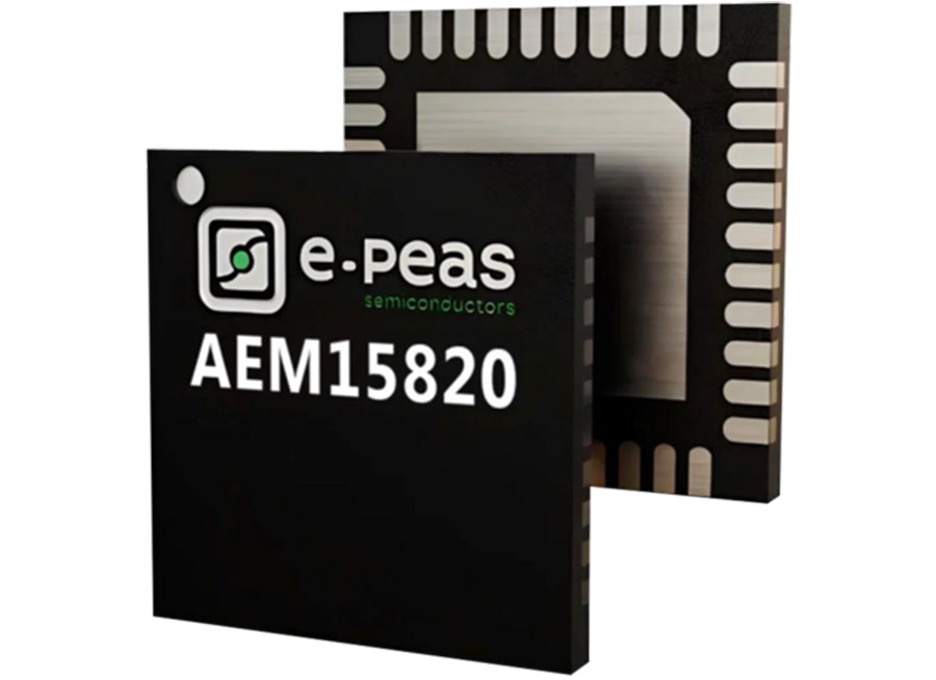
It is a single-chip device that can gather all types of hybrid indoor/outdoor photovoltaic cells. The power output range of these hybrid PV cells is broad, ranging from several watts in direct sunshine to microwatts under indoor lights. Multi-PMIC systems were previously required to control this range, which increased the cost and complexity of the overall system designs. The device maximizes harvested power across a wide range of input conditions thanks to its Maximum Power Point Tracking (MPPT) module and low- and high-power boost converters. It can operate in open-circuit ratio or constant-voltage modes. Operating from input voltages as low as 275mV (1.5µW minimum) is made possible via a dedicated cold-start circuit.
Sports or trekking laptops, self-charging headphones, PV-charged earphone covers, and e-readers are just a few of the many uses for the AEM15820. Power banks, smart backpack power modules, smart glasses, and remote security cameras are additional markets, reports Electropages.
What is the e-peas AEM15820 PMIC used for?
An extremely effective power management integrated circuit (PMIC) called the e-peas AEM15820 was created to capture energy from hybrid indoor and outdoor photovoltaic (PV) cells. By effectively transforming captured solar energy into usable electricity for wearables, Internet of Things devices, smart sensors, and portable consumer electronics, it makes self-powered electronic gadgets possible.
What is energy harvesting and why is it important?
In order to power electrical devices, energy harvesting collects energy from external sources including light, heat, vibration, or radio frequency signals. It lessens or does away with the need for disposable batteries, prolongs battery life, requires less maintenance, and encourages the creation of more environmentally friendly, maintenance-free product designs.
Read more Sound-Powered Sensors Could Eliminate Battery Usage
What advantages might hybrid indoor/outdoor photovoltaic cells offer?
From dim interior lighting to direct sunlight, hybrid photovoltaic cells can produce electricity in a variety of lighting scenarios. This makes linked devices perfect for portable gadgets, Internet of Things devices, and always-on smart products since it enables them to continue charging and functioning in various conditions.
How does the AEM15820 optimize PV cell energy harvesting?
Maximum Power Point Tracking (MPPT) and low- and high-power boost converters are combined in the AEM15820. These characteristics enable devices gather the most energy possible while maintaining efficient operation by continuously optimizing power extraction from solar cells under varying light conditions.
Which applications work well with the e-peas AEM15820?
Wearable technology, wireless headphones, earbud charging cases, smart glasses, e-readers, sports and trekking laptops, remote security cameras, IoT sensors, power banks, and smart backpacks with built-in solar charging are just a few of the self-powered and energy-efficient items that the AEM15820 is perfect for.
How is the design of an energy harvesting system made simpler by the AEM15820?
The AEM15820 removes the need for several PMICs by combining low- and high-power boost converters, MPPT capabilities, and cold-start capability into a single chip. This lowers the number of components, simplifies the design, lowers the total cost of the system, and speeds up the development of solar-powered electronics.