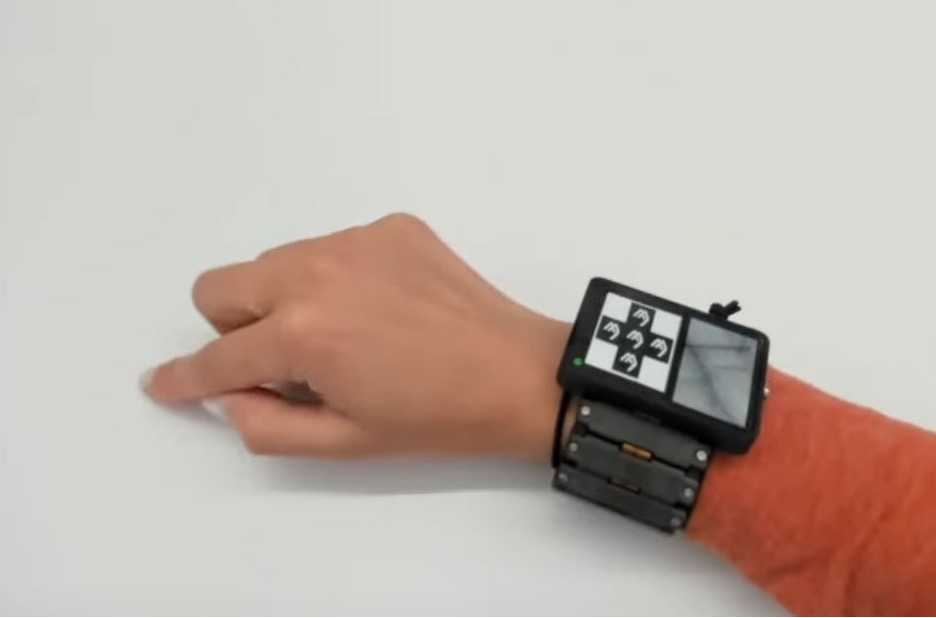
Meta researchers have created a wristband that can move a cursor, transform hand movements into orders to connect with a computer, and even turn scribbling in the air into text. People with limited movement or weak muscles may find it much easier to use today's personal electronics, and it may even open up new possibilities for easy device operation.
The Reality Labs team detailed their sEMG-RD (surface electromyography research device) in a paper published this week in Nature. It uses sensors to convert electrical motor nerve signals that pass through the wrist to the hand into digital commands that can be used to control a device that is connected, reports New Atlas.
Essentially, the bracelet’s sensors can track nerve signals that run through the wrist, translating them into commands for a connected device. This includes allowing users to navigate an interface, control a cursor, type, and much more. The team says that this technology has much more to offer, and that further development will yield more concise control and additional applications.
Years ago, Meta started working on this. The company prototyped an electromyography-based gesture control device in 2021 with the help of a team led by Thomas Reardon, who became director of neuromotor interfaces at Reality Labs in 2019. In order to improve interactions in augmented reality experiences, Meta was eager to create this technology at the time. At first, their goal was to make basic interactions possible, such as simulating a single mouse click. The study described in this paper was also led by Reardon.
Related Meta and Oakley Team Up for Performance AI Glasses
In addition to controlling a one-directional onscreen cursor (such as a laser pointer), you can use thumb swipes, thumb taps, and finger pinches to move through an interface and pick items. Even better, you can mimic handwriting and type text at a respectable 20.9 words per minute. Given that the average person types 36 words per minute on a phone keyboard, that last one is particularly clever.
Furthermore, although it can be adjusted for further customization, this system does not require calibration for each user before use. Regardless of who was using the wearable, the team devised a way to collect training data from study participants at scale and then process it through a neural network to precisely convert raw signals into commands.
According to the team, this technology might be further refined to directly detect the intended force of a gesture and be used in more complex joystick and camera controls. Additionally, it might lessen the already minimal physical effort needed to use phones and other electronic gadgets.