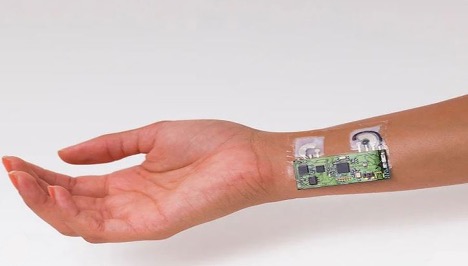
Imagine a clinical trial in 2036. Two hundred participants wearing sleek, sensor-laden wearables go about their daily routines while real-time data on their heart rate, blood pressure, and hormone levels flood into an AI engine. Doses of a novel cardiovascular medication are continuously calibrated for each patient, while virtual health assistants explain complex results in plain language.
For over a decade, technophiles have envisioned decentralized clinical trials where volunteers rarely need to set foot inside a hospital. The surge in consumer wearables – smartwatches, wristbands, smart clothing, and adhesive patches-fueled hopes for a rapid transformation. Packed with accelerometers, gyroscopes, photoplethysmography (PPG) sensors, and barometers, these devices capture physical activity, heart rate variability, body temperature, and sleep cycles, reports Nature.
Proponents point to undeniable advantages: higher patient retention, better access for remote communities, substantial cost reductions, and richer, around-the-clock data. Continuous remote monitoring provides an authentic look into a patient’s everyday life – far more accurate than a brief snapshot taken during a stressful clinic visit.
Tangible Proof in Cardiovascular Care
Cardiology has spearheaded the integration of wearables, accounting for nearly 29% of smartwatch-assisted trials, followed by neurology (21.8%) and oncology (11.5%).
Related Wearables Are Paving the Way for Data-Driven Healthcare
A landmark study led by Dr. Dipak Kotecha at the University of Birmingham highlighted this potential. Researchers used consumer Fitbit trackers alongside traditional methods to compare the efficacy of digoxin and bisoprolol in patients with atrial fibrillation and heart failure. Powered by 150 million data points, the trial proved for the first time that digoxin was just as effective as standard β-blockers – a conclusion that would have been impossible without continuous remote metrics.
Moreover, wearables can save lives. Real-time AI analysis can instantly flag dangerous vital sign anomalies, triggering immediate medical intervention. Economically, avoiding frequent on-site visits slashes trial expenses – which often run upward of $10 million for Phase III studies.
Why Has Progress Been So Slow?
Despite the undeniable promise, the digital overhaul of clinical research remains a gradual evolution rather than a sudden revolution. Data from ClinicalTrials.gov showed that drug trials incorporating wearables grew from under 30 in 2014 to a modest 128 in 2024.
The primary bottlenecks aren't hardware limits; they stem from real-world execution, regulation, and trust:
As AstraZeneca’s Martin Cowie notes, successfully scaling wearable technology in clinical research isn't just about accumulating vast piles of data – it requires building robust, clinically validated systems that regulators, researchers, and patients can trust.