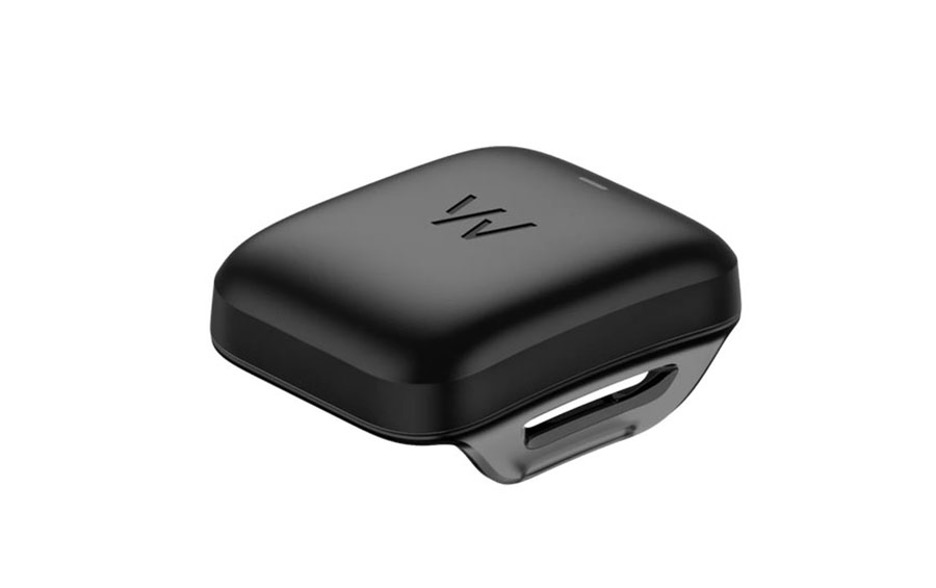
WHOOP may have found a new use for its removable PowerPack. Beyond charging the tracker, the small battery pack could help estimate core body temperature, a feature WHOOP’s current bands don’t offer.
The idea comes from a US patent application published on October 22, 2026, titled “Core Body Temperature.” The concept might sound unusual, but the approach makes sense once you understand how it works. And no, you won’t need to wear the charger all day, reports GadgetsAndWearables.
Measuring skin temperature at the wrist is relatively straightforward, and many wearables already do it. Measuring core body temperature, however, is a different challenge.
Your skin temperature can change depending on the surrounding environment, what you’re wearing, how much you sweat, and other factors. That makes it difficult to use skin temperature alone to estimate what’s happening inside your body.
WHOOP’s proposed solution is to study how heat moves between the body and the wearable instead of relying on a single temperature reading.
How the PowerPack Could Help
The patent describes a system that uses several temperature sensors. One would measure temperature close to the skin, while another would sit inside the removable PowerPack. Additional sensors could monitor temperatures at different points within the device.
While charging, the PowerPack would introduce a controlled amount of heat. The system could then measure how temperatures change across the device and use that information to understand its thermal properties and how it interacts with the body.
Read more Wearables Are Paving the Way for Data-Driven Healthcare
That’s the key to the idea. The PowerPack wouldn’t directly measure the temperature deep inside your body. Instead, it would help WHOOP calibrate a model that interprets the temperature readings its sensors can collect.
The system could combine skin temperature measurements, estimated heat flow, and this calibrated model to calculate an estimate of core body temperature.
You Wouldn’t Need to Wear the Charger All Day
Most WHOOP users attach the PowerPack only when their tracker needs charging. The patent takes this into account, describing a method that collects useful temperature data during normal charging without requiring any extra effort from the wearer.
The PowerPack could help calibrate the system, with the resulting parameters stored for use in future temperature estimates.
In simple terms, charging the tracker could also give WHOOP an opportunity to learn more about how heat moves through the device and the body beneath it. Once calibrated, the system could use that information to estimate core temperature without needing the PowerPack to remain attached.
What Could This Mean for WHOOP Users?
WHOOP already tracks skin temperature, typically using overnight readings to monitor changes against a person's usual baseline. Adding an estimate of core body temperature could provide another way to understand the body's daily temperature patterns.
WHOOP isn't the only company exploring this technology. I recently tested the Speediance Strap Pro, which also estimates core body temperature, although it uses a different combination of heat-flow measurements, skin temperature readings, and modelling.
One potential application is exercise. Core body temperature could help users understand how their bodies respond to prolonged workouts, particularly during intense training or in hot weather. It could give WHOOP another way to assess physiological strain alongside existing metrics such as heart rate and heart rate variability (HRV).
The technology could also prove useful beyond exercise. Core body temperature naturally changes throughout the day and is closely connected to the body's circadian rhythm. Tracking these changes could eventually provide additional insights into sleep patterns and recovery.
For now, this remains a concept described in a patent application, not a confirmed WHOOP feature. The filing suggests one possible way the company could expand its temperature-tracking capabilities, but it doesn't guarantee that the technology will appear in a future product.