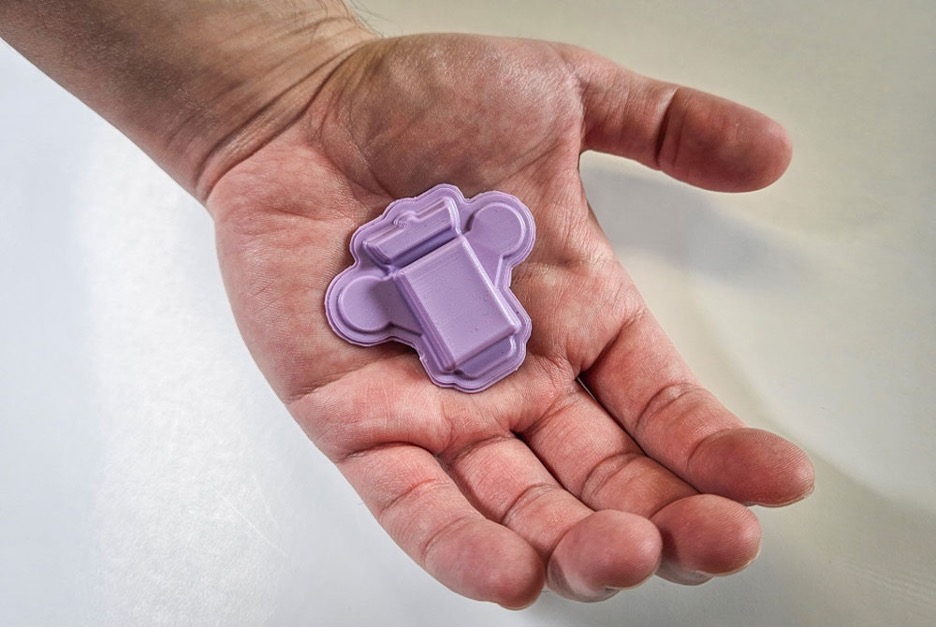
Northwestern University engineers have developed a small, wireless polygraph system you can wear.
Unlike polygraphs used in television crime dramas, this wearable version isn’t optimized to detect lies. Instead, engineers and physicians designed it to sense underlying stress hidden deep within the body – no interrogation room required.
The lightweight, bandage-like device gently adheres to the chest, where it simultaneously measures heart activity, breathing patterns, sweat response, blood flow and temperature. Together, these signals capture a real-time, whole-body view of stress, reports Amanda Morris in Northwestern
By continuously tracking multiple physiological signals at once, the device could help clinicians detect stress and potential discomfort in patients — including infants or the elderly — who may be unable to communicate, diagnose sleep disorders without cumbersome in-laboratory equipment, monitor mental health over time and even sense early warning signs of medical complications. The study was published in the journal Science Advances.
“Sometimes, the body manifests signs of stress before a person is consciously aware of it,” said Northwestern’s John A. Rogers, who led the device development. “Even if people don’t realize how much pressure they are under, stress is quietly affecting their health. Prolonged stress can have adverse consequences, especially for pregnant mothers, children and critically ill patients. An ability to track stress based on quantitative measurements could empower people to take stress-relieving actions with direct benefits to their health. Importantly, we aimed to design a device, conceptually like a polygraph system, that operates on the basis of biophysical body responses, without requiring access to chemical biomarkers found in body fluids.”
Read more New Brain Implant Decodes A Person's 'Inner Monologue'
A world-renowned bioelectronics pioneer, Rogers is the Louis Simpson and Kimberly Querrey Professor of Materials Science and Engineering, Biomedical Engineering and Neurological Surgery at Northwestern, where he has appointments in the McCormick School of Engineering and Northwestern University Feinberg School of Medicine. He also directs the Querrey Simpson Institute for Bioelectronics and the Querrey Simpson Institute for Translational Engineering and Advanced Medical Systems. Rogers is co-corresponding author of the study along with Dr. Debra E. Weese-Mayer, the Beatrice Cummings Mayer Professor of Pediatric Autonomic Medicine and professor of pediatrics (neurology) at Feinberg and Jae-Young Yoo of Sungkyunkwan University in Korea.
A voice for the vulnerable
The project started as a request from pediatricians at Ann & Robert H. Lurie Children’s Hospital of Chicago. Over the years, Rogers’ team has developed a suite of wireless, wearable electronics for infants and children — to track vital signs, monitor illness, treat congenital conditions and diagnose disease. Now, pediatricians asked Rogers to create a soft, non-invasive device to detect and continuously track stress levels in babies throughout hospital stays, without measuring stress’ biochemical signatures in saliva and blood.
Currently, detecting babies’ stress often depends on what caregivers can see and hear — crying, facial expressions and movement — along with basic vital signs. But these signals can be subtle, inconsistent or even entirely absent.
“Stress is often scored using survey sheets and nursing assessments,” Rogers said. “The entries include things like tonality and volume of crying. Infants obviously cannot describe their own pain levels. So, unlike with adults, determining stress in babies can be incredibly challenging. We wanted to take subjectivity out of these assessments.”
“This new device tracks the body’s stress signals around the clock, helping quantify how long someone is stressed each day and how intense that stress is,” said Weese-Mayer, Rogers’ long-time collaborator. “The beauty of the device is that both individuals and healthcare providers can now identify stress and objectively monitor the effectiveness of interventions to decrease stress and restore a healthy balance, in a completely non-invasive manner.”
All-in-one stress sensing
To do that, Rogers and his team found inspiration in a surprising place: polygraphs. Although they are colloquially called “lie detectors,” polygraphs actually don’t detect lies. They measure the body’s response to stress, which can be triggered by many factors besides deception. Rogers saw an opportunity to build on that core idea. But, while traditional polygraph machines rely on a patchwork of bulky, wired sensors, Rogers aimed to capture those same physiological signals — and then some — in a more comprehensive, fully integrated, accurate and wearable form.
The system wirelessly transmits these synchronized data streams to a smartphone, smart watch or tablet, where machine learning algorithms analyze patterns associated with stress in real time. Weighing less than 8 grams (equivalent to eight paperclips) and designed to move naturally with the skin, the device can operate continuously for more than 24 hours.
Proven across realistic scenarios
After developing the system, Rogers’ team validated it across a wide range of scenarios, including controlled experiments and real-world environments. During simulated lie-detector tests, the wearable device accurately captured stress responses triggered by sensitive questions and closely matched measurements from commercial polygraph systems.
What’s next
Next, the team aims to move its technology beyond validation studies and into broader clinical use. Next steps will include testing the device in larger patient groups, refining its ability to personalize stress detection and integrating it into hospital and at-home monitoring systems to provide continuous, real-time insight into patient health.