Falls are one of the most significant health and economic issues in Australia and worldwide. In Australia, the treatment of injuries from falls in older people cost the economy $2.3 billion in 2020.
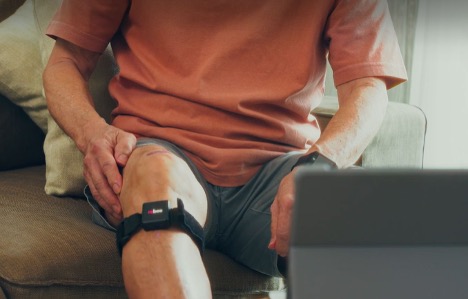
Now, a new algorithm written by researchers from Neuroscience Research Australia (NeuRA) and UNSW Sydney could help promote health in older people and at-risk population reports UNSW. The Watch Walk algorithm measures walking steadiness and speed. By pairing it with a wearable tech device such as a smartwatch, the algorithm can provide real-time feedback on how to improve individual walking stability to reduce falls.
Digital gait biomarkers are quantitative measures of aspects of an individual’s gait, such as posture, cadence, walking speed, and length of stride, that offer insights into the overall health and functional decline and can often predict their likelihood to fall.
Read more: Australian Government Allots US$7 Million to Enhance Healthcare Using Wearables
UNSW Medicine & Health and NeuRA research and co-lead author of the study, Lloyd Chan said it was the first time an algorithm for measuring gait had been widely tested in real-world environments. “We know that the way people walk is a predictor of their health. For example, people who walk more slowly, infrequently, in smaller steps, or for shorter distances are typically more likely to suffer a fall."
“Our goal was to capture this data through looking at how individuals naturally walk in their daily lives and then test this broadly on over 70,000 individuals.”
The new algorithm was created using movement data generated from wrist sensors worn by 101 study participants aged between 19 and 81. The algorithm's validity was later tested in another study involving around 79,000 participants from the UK Biobank database. Participants aged 46 to 77 were instructed to wear wrist devices for a week to record their movements, which were classified into walking, running, stationary, or unspecified arm activity. This study then found the Watch Walk algorithm to precisely measure those movements.
According to the researchers, their two-stage study was the first to widely test an algorithm for measuring gait in real-world environments.