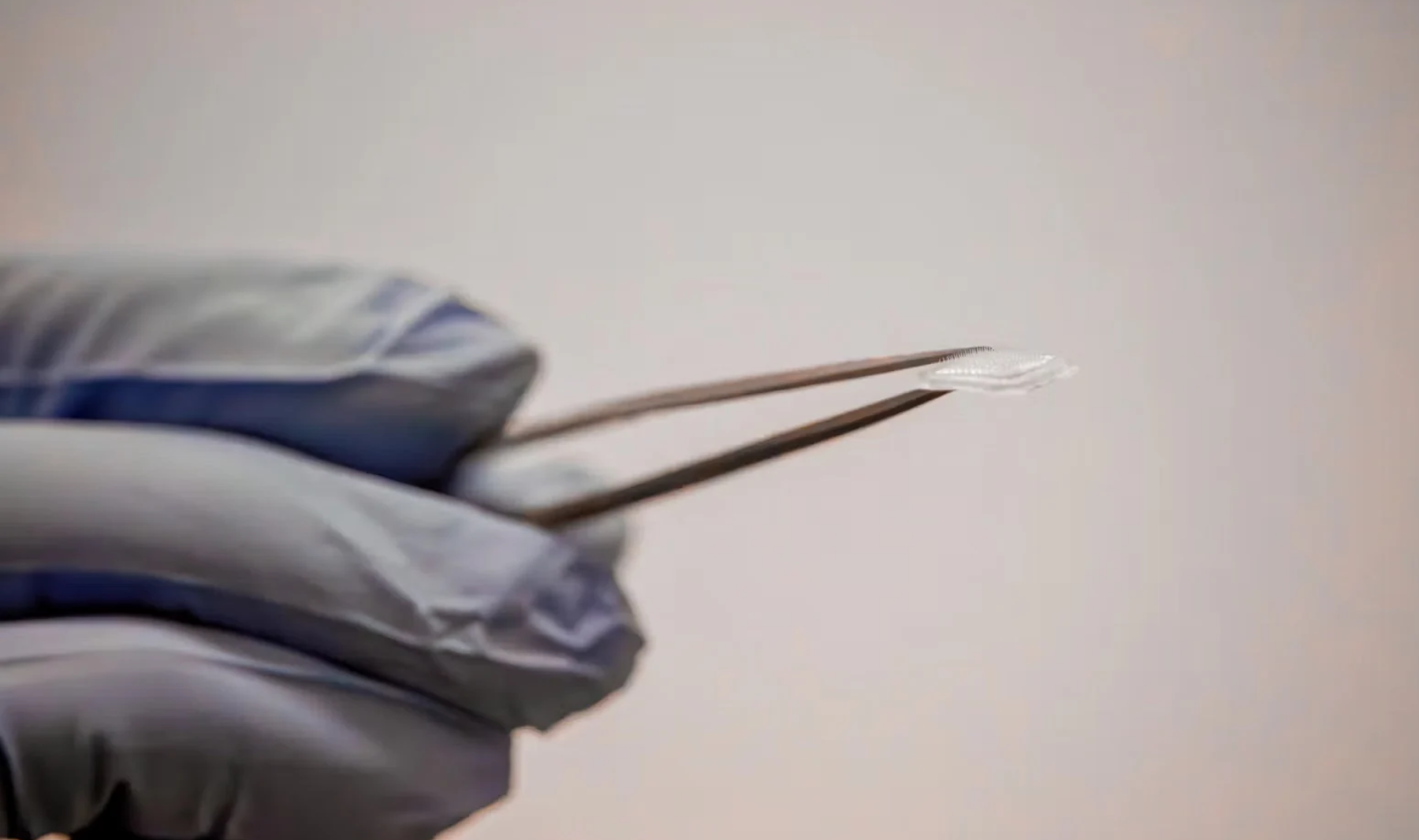
Many heart injuries after surgery go unnoticed. Researchers at McMaster University in Canada have now developed a wearable patch that could change that. The device uses tiny, painless microneedles to continuously measure cardiac troponin, a protein the heart releases when it is injured, over several days.
Around 300 million people worldwide undergo non-cardiac surgery every year, and more and more of them are sent home on the same day. However, about 20% of higher-risk patients suffer a myocardial injury after non-cardiac surgery (MINS). Most of these cases have no obvious symptoms, reports McMaster University.
According to Leyla Soleymani, professor of Engineering Physics and lead of engineering innovation at NexusHealth, about 90% of these cases are silent. Diagnosing them usually requires a blood test, which is difficult once patients are back home. The team therefore wanted a way to monitor patients continuously without repeated blood draws.
How Does the Microneedle Patch Work?
The patch has microscopic polymer needles that reach just beneath the skin, without touching nerves or blood vessels. They collect interstitial fluid, the fluid between cells, and pass it to a biosensor that tracks troponin levels.
This is a major technical challenge. Troponin is present in very low concentrations in the blood and is even more diluted under the skin. Earlier versions of the technology could only monitor smaller molecules such as lactate. To detect a protein, the researchers combined antibodies, which recognize the protein, with aptamers, short engineered strands of DNA or RNA that generate a measurable signal.
Related Breathable Paper Patch for Wearable Health Care
According to Soleymani, monitoring such a low-level protein continuously in living tissue is the key advance. The team had to develop new sensing strategies, find a way to refresh the sensor, and integrate everything into a comfortable device. The findings were published in the journal Science Advances.
The microneedle technology was developed by researchers at the University of Waterloo. Co-author Mahla Poudineh, now an associate professor at NYU Tandon School of Engineering, said that creating microneedles that sample fluid comfortably and painlessly was a key step. The device has been tested in mouse models of heart disease, which Professor Bernardo Trigatti described as an important step toward clinical use.
When Could the Patch Reach Patients?
The Canadian Institutes of Health Research (CIHR) is funding further testing, and the start-up Aptec Health was founded to bring the technology to patients. Beyond surgery, the researchers see wider potential for capturing health changes between clinic visits. "The future of medicine is personalized, and personalized medicine needs data," Soleymani said.