Assistive technologies are becoming increasingly common, offering new ways to support rehabilitation, improve safety, and make everyday life easier for older adults and people with disabilities.
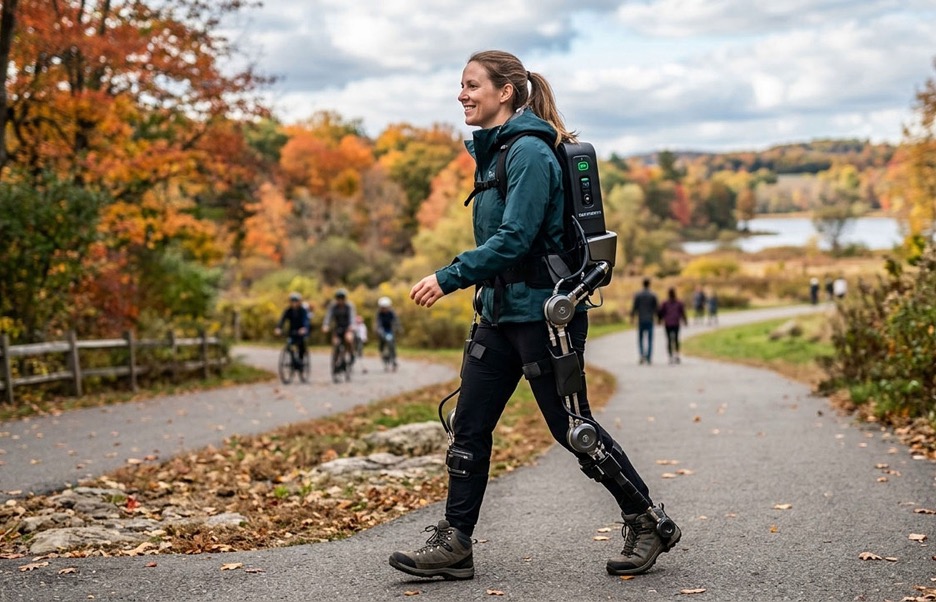
At the recent Care & Rehabilitation Expo China 2026 in Beijing, one device attracted particular attention: a lightweight exoskeleton designed to be worn beneath ordinary clothing. Unlike traditional exoskeletons, which are often bulky and mainly used in hospitals and rehabilitation centers, this compact device is barely noticeable when worn. Visitors soon began calling it the “invisible robot.”
Developed by Hunan Yijiang Medical Technology Co., Ltd., the device is intended for people with mobility difficulties, including those with paraplegia, hemiplegia, and weakness in their lower limbs, reports stdaily.
According to Duan Rongqiong, the company's deputy general manager, the exoskeleton is just two centimeters thick and fits closely against the body. Its lightweight construction makes it easier for older adults to wear, while its discreet design allows users to avoid the attention that often comes with visible assistive equipment.
The technology's main advantage, however, lies in how it responds to the user's movements.
Related Robotic Exoskeleton for MND at UQ
Duan explained that the device uses proprietary intelligent algorithms to recognize walking patterns and predict movement intentions in real time. It begins providing assistance as soon as the wearer starts moving, offering gentle support at slower speeds and increasing power as the user walks faster.
Among those already using the device is a woman from Yuxi, Yunnan province, identified only by her surname, Long. She contracted polio during childhood and has relied on crutches to walk ever since.
"With the invisible robot, I can not only stand steadily but also walk independently for the first time in more than 40 years," Long said. "My hands are free and I can straighten my back." She acknowledged that the device could not restore full physical abilities but the experience of taking a step and feeling her body move in response to her own intentions brought her to tears.