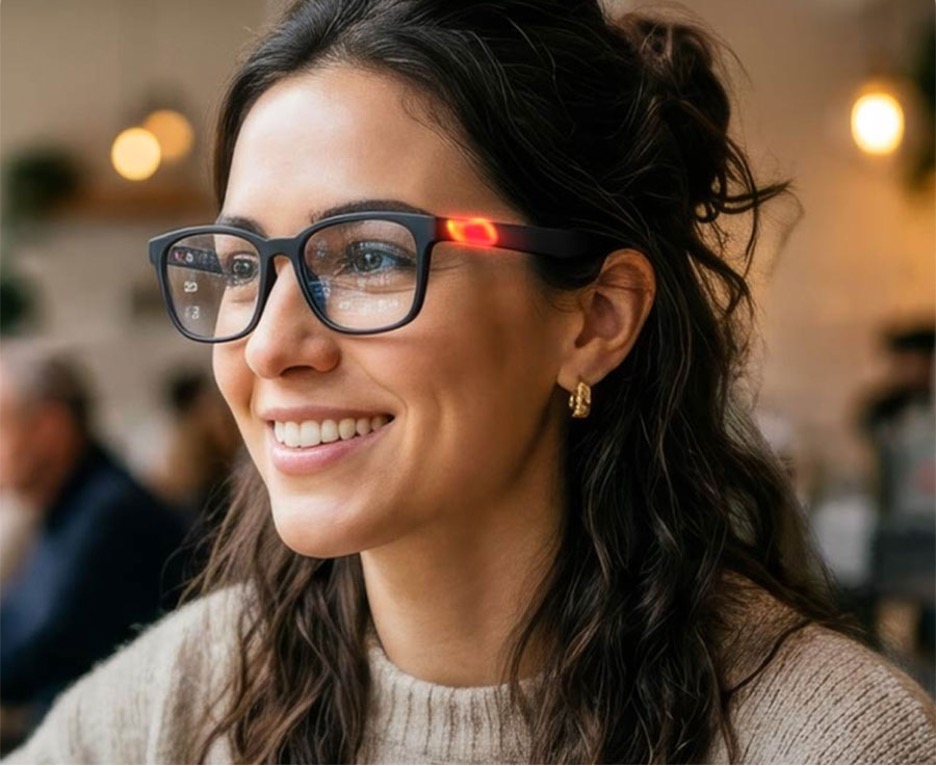
One significant question still stands: when will consumers genuinely want to purchase and wear these gadgets all day? Meta, Google, and other large players are speeding up their AI wearable initiatives. Before they can be widely used, the next generation of wearables—from smart glasses to AI pendants—must overcome basic hardware issues like weight, heat, comfort, battery life, and audio quality. Even the best AI experience won't work if the gadget it runs on is heavy, cumbersome, or overheated.
“From a hardware perspective, there are two fundamentals that are really sticking out. One is weight. Basically, the everyday eyeglasses magic number is 30g. You need to weigh under 30g to be comfortable to sit on the bridge of your nose and your ears all day. Most smart glasses are 50g and up,” Mike Housholder, Vice President and General Manager of the Thermal Management Business Unit at xMEMS, told Electronic Specifier’s Paige Hookway, in an interview.
Cutting weight starts with the speaker. By substituting a thin MEMS device for a conventional coil-and-magnet driver, the speaker loses about 70–90% of its weight and thickness, allowing designers to strive toward a more stylish, glasses-like form factor rather than a heavy headset.
According to Housholder, the second basic is thermal management, which most businesses undervalue. Instead of running a task and then going back to sleep, glasses are being asked to perceive and process continually as AI processing moves from the Cloud to the Edge.
“You now have complex chips generating heat, and the glasses sit on your skin all day,” he explained. “So heat mitigation, heat dissipation becomes a big issue, because you don’t want to have a heat generator touching your skin all day. You can’t just spread heat; you have to get it out before it sinks into the plastics and then sinks into your skin.”
Related New Partnership to Develop AR Glasses Apps
Engineers must address all three constraints—audio, cooling, and power—within the same tightly confined mechanical envelope, in addition to weight and heat alone. Housholder remarked, "All of this takes space." "To achieve a good form factor, the electronics will always be at odds with the mechanical."
The first-generation cooling product from xMEMS is already made into glasses and is scheduled to hit the market in 2027. The company created the XMC-1200, a smaller version that is around 40% smaller than its predecessor, in response to feedback from early users of its current XMC-2400 device.
The demand wasn’t driven by the glasses’ processor, but by the display. As augmented reality glasses evolve, their displays sit at the front, creating a need for smaller components that can fit within the limited space housing the display driver and light engine, Housholder explained. Manufacturers can now use the XMC-1200 to manage heat generated by the display and light engine, while the larger XMC-2400 remains an option for handling heat from the processor and temple electronics.
Asked what the industry looks like once these constraints are resolved, Housholder starts with comfort rather than capability. “You have glasses that are light enough to wear on your head all day, just like conventional glasses. They have to be comfortable to wear, meaning they can’t heat up the temples of your head. So they’ve got to stay cool, they’ve got to mitigate heat.”
Only when weight and heat are brought under control can these glasses unlock their full potential—supporting continuous, always-on processing and delivering real-time information about the wearer’s surroundings without compromising comfort.